Balancing Human Review and Automated Output in Business Tasks
Why the Choice Matters for Sensitive Work
Generative AI tools have become common in many workplaces, helping teams draft documents, analyse data, and generate reports quickly. But when the task involves sensitive information - customer records, financial figures, legal documents, or internal strategy - the question of who or what checks the output becomes critical. A fully automated pipeline might save time, but can it catch subtle errors or ethical slip-ups? Human review, on the other hand, adds a layer of judgment but can slow things down. The best approach often depends on the risk level of the task at hand.
What Automated Output Offers
Automated systems process large volumes of data fast. They follow programmed rules or model patterns to produce results without fatigue. For straightforward tasks - summarising public reports, generating standard email replies, or flagging obvious anomalies - automation can handle the load reliably. The speed is a clear advantage when time is tight or the volume is high. Consistency is another benefit: the same input almost always yields the same output, which helps maintain a standard format across many items.
Yet automation has blind spots. It does not understand context the way a person does. A model trained on general data might produce text that sounds right but contains factual errors or biased phrasing. It may miss nuances specific to your organisation or industry. The output may be technically correct but inappropriate for the audience. This is where human oversight becomes necessary.
When Human Review Adds Value
Human review injects contextual awareness and ethical judgment. A person can weigh the implications of a particular word choice, catch subtle bias, and decide whether the output aligns with company policy or legal requirements. For tasks involving sensitive information - such as drafting responses to customer complaints, generating performance reviews, or writing internal memos about organisational changes - a human reviewer catches what algorithms miss.
Reviewers also handle edge cases better. If a model produces an odd or unexpected result, a person can question it, research the correct information, and adjust accordingly. This reduces the chance of a small error turning into a bigger problem. However, human review takes time and costs more per unit of output. Scaling it across hundreds or thousands of items can strain resources.
Finding the Middle Ground
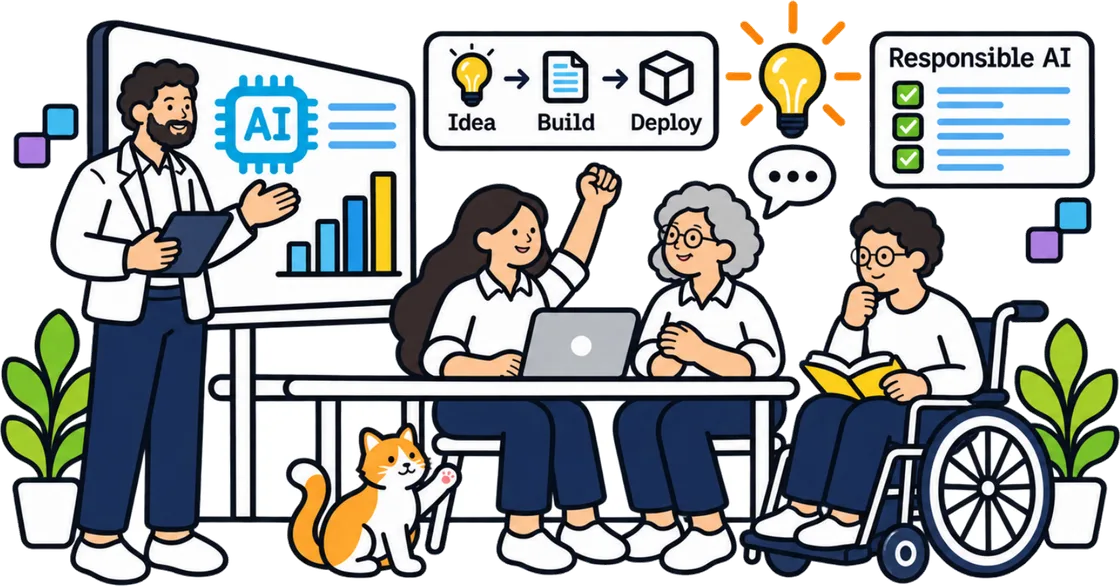
Most organisations settle on a hybrid model. They let automation handle the bulk of the work, then route the output to a human when the risk level is high. For example, a marketing team might use generative AI to draft multiple versions of a social media post, but a human reviews the final selection for tone, accuracy, and brand voice. Similarly, a finance department might run automated checks on transaction data, but a person reviews any flagged exceptions before taking action.
This approach relies on clear rules about what triggers a human review. You might set thresholds based on data sensitivity, the potential impact of an error, or regulatory requirements. Building those rules requires understanding the types of mistakes the system can make and the consequences of each. Regular audits of the automated output also help identify patterns that need human attention.
Training plays a key role here. Teams that understand the capabilities and limitations of generative AI are better equipped to set up effective workflows. A generative AI principles course can help professionals learn how to evaluate output, spot potential issues, and design review processes that fit their context. For instance, the course offered through UCC in Singapore gives participants hands-on experience building a simple generative AI application over two days. This practical exposure helps them see first-hand where automation works well and where human judgment is essential.
Risk Assessment and Access Control
Before deciding on a review process, it helps to classify the sensitivity of the task. Consider these factors:
- Does the output contain personally identifiable information (PII)?
- Could an error cause financial, legal, or reputational harm?
- Is the output intended for an external audience or internal use only?
- Are there industry regulations that govern the content?
- How quickly does the output need to be produced?
Tasks that score high on the first four points usually benefit from human review. Those that are low on those points and high on the last point may work well with automation alone. Access control also matters. Not every employee should have the same level of authority to approve or override automated output. Setting clear roles - who can review, who can override, and who can adjust the model settings - reduces the chance of misuse.
Monitoring and Continuous Improvement
Even with a hybrid system in place, ongoing monitoring is important. Automated models can drift over time as the data they process changes. A model that performed well six months ago might now produce more errors because the underlying patterns have shifted. Regular checks on output quality help catch this drift early. Human reviewers should log the corrections they make, so the team can spot trends and update the automation rules or retrain the model if needed.
Output monitoring also feeds back into the review process itself. If reviewers consistently change the same type of output, that might indicate the automation needs adjustment. Over time, the organisation can refine its thresholds for when to route work to a human, making the workflow more efficient without sacrificing quality.
When to Lean on Human Judgment
Some situations almost always call for a human in the loop. Drafting legal agreements, writing medical advice, preparing financial reports for external regulators, or handling customer communications during a crisis are examples where the cost of an error is high and the context is nuanced. Even if an automated system generates a first draft, a qualified human should review and approve it before use.
Conversely, tasks like generating internal status updates, creating draft meeting agendas, or producing summaries of public data can often go straight from automation to the recipient with little risk. The key is knowing where the line sits for your specific work environment.
Building Responsible AI Practices
Ultimately, the choice between human review and automated output is not a one-time decision. It is a practice that evolves as your team gains experience with the tools. Principles such as data privacy, bias mitigation, and transparency should guide every step. A practical training programme, like the one offered through UCC, equips professionals to think critically about these trade-offs and implement workflows that balance speed with responsibility.
When professionals understand both the strengths and the limitations of generative AI, they can design processes that get the best from both humans and machines. The goal is not to replace human judgment, but to use automation where it adds value and preserve human oversight where it matters most.